LIFE no Google


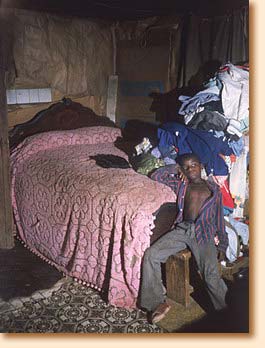
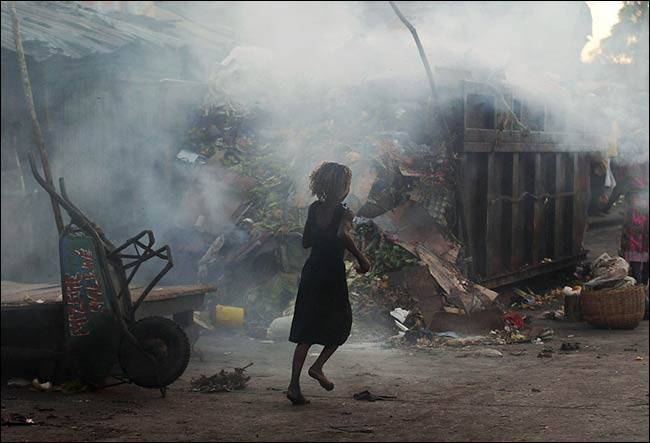
O Google imagens tem agora integrado o arquivo fotográfico da LIFE
Família Obama vai plantar uma horta biológica nos jardins da Casa Branca
20.03.2009 - 16h21 Helena Geraldes
in Público Online
A família Obama vai plantar no jardim da Casa Branca brócolos, alfaces, ervilhas, cebolas e espinafres, uma horta biológica ao cuidado do próprio pessoal da Casa Branca, noticiou hoje a imprensa americana. A primeira-dama, Michelle Obama, quer promover hábitos saudáveis junto das crianças.
A “primeira semente” será lançada hoje, numa cerimónia que terá como anfitriã Michelle Obama e onde participarão alunos da Escola Primária de Bancroft, noticia o “Washington Post”. Estes continuarão a ajudar a plantar as sementes e a colher os vegetais.
“Estamos a trabalhar num novo e maravilhoso projecto para o jardim”, contou Michelle Obama à revista “O”, de Oprah Winfrey, edição de Abril.
“Queremos usá-lo como instrumento de educação, para falar sobre a saúde e que delicioso é comer alimentos frescos, como os podemos colher e torná-los parte de uma dieta saudável”, acrescentou.
Os talhões para os 55 tipos de vegetais serão plantados na parte Sul dos terrenos da Casa Branca. Katie McCormick Lelyveld, porta-voz da Casa Branca, garantiu que toda a família Obama vai estar envolvida nos trabalhos da horta. Apesar de a manutenção dos jardins ser da responsabilidade do Serviço Nacional de Parques, a horta será plantada e cuidada pela própria Casa Branca. Desta horta deverão sair vegetais e ervas aromáticas para a família e convidados.
Além dos legumes, haverá morangos, ervas aromáticas e duas colmeias, entregues aos cuidados de um carpinteiro da Casa Branca que também é apicultor.
As sementes serão orgânicas, assim como os fertilizantes e repelentes de insectos.
Segundo o “Washington Post”, há dez anos que vários movimentos pedem uma horta biológica no jardim da Casa Branca. “Nada poderia ser mais entusiasmante”, comentou Alice Waters ao jornal. Waters é “chef” do restaurante Chez Panisse, em Berkeley, Califórnia, e que desde a primeira administração Clinton pede uma horta na Casa Branca.
Mas a horta dos Obama não será a primeira na Casa Branca. O Presidente John Adams (1797 – 1801) plantou uma em 1800. Em 1918, Woodrow Wilson (1913 – 1921) levou ovelhas para fertilizar os relvados da Casa Branca e conservar recursos num palco de guerra. Em 1943, Eleanor Roosevelt plantou um jardim da vitória, inspirando milhões de norte-americanos a plantar os seus próprios alimentos durante e Segunda Grande Guerra.
Os esforços recentes têm sido mais modestos, conta o jornal. Jimmy Carter, em 1978, recusou os pedidos para a plantação de uma horta. Nos anos Clinton foi plantada uma pequena horta no telhado da Casa Branca, tendo sido rejeitada a ideia de uma horta nos jardins por alterar a concepção formal dos terrenos.
Obscurantism in science has often be come a goal in itself. But it is not enough to confuse the reader; one has to know what it is that one intends to confuse the reader about.

Note the international moNItary fund, lol
INTERNATIONAL MONITARY FUND
External Review Committee on
Debt Statistics Andfund audit
Balance DebtIMF-World Bank
Collaboration.
Attention: Beneficiary,
Following the protest of the United Nations,The World Bank and IMF,that all outstanding foreign debts especially compensations,Lottery, next of kin,contract payments and online transfer should be released to the beneficiaries forthwith unconditionally from transactions with any Mortgage & Finance institutions in European and African countries.
And also the lost of reasonable amount of cash and properties as a result of Scams Artists, Hurricane Wind,Tornado,Earth Quakes Flood and Oil Spillage & others,United Nations Rehabilitation department is now paying victims that suffered from any of those hard luck in accordance with the U.N-recommendations.The International Community has approved the payment,
This development was a result of new payment policy revolution of 2009,carried out by the WorldFinancial Body in collaboration with World Bank Audit unit and United Nations Policy maker, unit under world bank new year payment constitution.This effort is to help the international monitary fund restrict and monitor
every international transaction to avoid money laundering activities and will help us to fight against fraudulent activities from scam experts.
Furthermore you are advice to reconfirm you billing address including (1)FullName..(2)Contact:Homeor Office-Address..(3)Phone AndFax#.. (4)Your age and current occupation...Attach Copy ofyour Identification to the Euro Finance Investment Bank for the issueing of certified ATM Credit Card,the contact information is as follows:
EURO FINANCIAL BANK ACCRA,REPUBLIC OF GHANA
xxxxxxxxxxxxxxxxxxxxxxxxxxxxxxxxxxxxxxx
E-mail: xxxxxxxxxxxxxxxx@accountant.com
Or xxxxxxxxxxxxxxx@aim.com
TELE/FAX+xxxxxxxxxxxxxxx
NAME:Mr:Gary Smith
NB:Note that you can only withdraw just $20,000.00 per day till your fund is completed.Please do not reply to this E-mail contact the Bank immediately with the necessary information required from you so that they will commence on proceeding.Once again,I apologize toyou on behalf Of IMF(International MonitaryFund)failure to pay your funds in time,which according to records inthe system had been long overdue.
Yours sincerely,
Mr.Koffi Edward
Lista dos mais ricos do Mundo inclui um traficante de droga
Bill Gates, fundador da Microsoft, voltou a ser o homem mais rico do Mundo, com uma fortuna de 40 mil milhões de dólares, divulgou hoje a revista Forbes que, pela primeira vez, integra um traficante de droga da sua lista. É o mexicano Joaquín Guzmán Loera, com uma fortuna de mil milhões de dólares.
Joaquín Guzmán Loera, líder do cartel de Sinaloa, "é um dos maiores traficantes de cocaína dos Estados Unidos", afirmou a coordenadora do estudo, Luísa Kroll, que durante a apresentação sublinhou ainda que as autoridades dos EUA oferecem cinco milhões de dólares de recompensa pelo narcotraficante, cuja "situação financeira é bastante boa".
Conhecido como "El Chapo" Guzmán, o traficante mexicano é um dos 38 novos rostos a figurar nesta selecta lista, em que estão representados mais de 50 países e que, para ser seleccionado, cada um dos magnatas tem de ter pelo menos mil milhões de dólares.
Segundo a revista Forbes, Bill Gates, fundador da Microsoft, voltou a ser o homem mais rico do mundo, com uma fortuna de 40 mil milhões de dólares (31.2 mil milhões de euros), apesar da crise económica global que reduziu o número de milionários do planeta.
"Não é uma surpresa que os milionários tenham sido afectados pela economia mundial", disse hoje Steve Forbes, presidente e conselheiro delegado da revista Forbes.
Lista dos mais ricos passa de 1.125 para 793 nomes
No ano passado, Bill Gates estava no terceiro lugar do clube dos multimilionários, tendo perdido 18 mil milhões de dólares (14 mil milhões de euros) de um ano para o outro, sobretudo devido à desvalorização de 45 por cento das acções da Microsoft.
Warren Buffet, com 37 milhões de dólares (28.9 mil milhões de euros), perdeu a liderança que tinha em 2008, depois dos 13 anos em que Gates se manteve na primeira posição.
Buffet perdeu 25 mil milhões de dólares (19.5 mil milhões de euros) e é o segundo homem mais rico do mundo.
O empresário mexicano Calos Slim Helu, com uma riqueza de 35 mil milhões de dólares (27.3 mil milhões de euros), ocupa a terceira posição do clube dos mais ricos do mundo.
Em quarto lugar está o estudante norte-americano Lawrence Ellison, co-fundador e conselheiro da Oracle, com uma riqueza de 22.500 milhões de dólares (17.6 mil milhões de euros).
O quinto homem mais rico do planeta é o sueco Ingvar Kamprad, com 22 mil milhões de dólares (17 mil milhões de euros), fruto do negócio da companhia de mobiliário e acessórios para a casa Ikea.
A lista dos multimilionários de 2009 é composta por 793 empresários, sendo que no ano passado a lista tinha 1.125 nomes.
Lusa
noticia, e não fotos, retirada de SIC Online
... diluída a fronteira entre a "riqueza legal" e a "riqueza ilegal" está toda do mesmo lado.
Free Software and Beyond
The World of Peer Production
4th Oekonux Conference
in cooperation with
P2P Foundation
March 27th-29th, 2009
University of Manchester
http://www.oekonux-conference.org/
Invitation
Project Oekonux researches the economical, political and social forms of Free Software and similar forms of production we collectively call peer production. In Project Oekonux, different people with different reasons and different approaches get together to build something new. A lot of participants want to know, whether and if so, how, the peer production can serve as a basis for a new society.
For the 4th Oekonux Conference Project Oekonux cooperates with the P2P Foundation. The Foundation for Peer to Peer Alternatives researches, documents and promotes P2P practices in every domain of social life. It's a global cyber-collective and aims to be a knowledge and internetworking platform for open/free, participatory, and commons-oriented initiatives on a global scale.
During the past decade the phenomenon of Free Software has become successful and well-known. It is still amazing how in the realm of software the creativity of so many volunteers leads to products which are useful for the whole mankind. Ten years after Project Oekonux was founded the world has changed. As expected by us the principles of the development of Free Software are spreading out to other fields. Wikipedia and Open Access are two of the most interesting examples among many. It is time to look at peer production from a broader perspective.
The 4th Oekonux conference "Free Software and Beyond. The World of Peer Production" takes up this development and widens the perspective from Free Software to other fields of peer production. Project Oekonux and P2P Foundation are proud to welcome nearly 30 invited contributors which will share their experience, studies and insights with us on the following topics
* Peer production beyond Free Software
+ Free Design of material goods for less industrialized countries
+ Open Source Car
+ Free Science with Open Access
+ Open Street Map project
+ Peer production in art
+ Free Farming
+ Free Knitting
* Aspects of Free Software
+ Free Software in Latin America
+ Innovation in Free Software
+ "Others" in the community
+ Communities and single developers
+ Women in Free Software
* Peer production and social movements
+ The Hipatia project
+ Social movements and peer production
+ Indigenous movements and cyberspace
* Theories on peer production
+ Patterns in peer production
+ Market and peer production based economies
+ Peer production and the concept of truth
+ Organization in peer production
* Future of peer production
+ Current limitations of peer production
+ Money and peer production
+ Ideas for expanding peer production
+ Political scenarios for expanding peer production
Please see the program page for detailed information and some more contributions.
Please register for free: http://www.oekonux-conference.org/registration.html
Web-Site: http://www.oekonux.org/


Jantar-teatro, no âmbito da semana cultural da UC, do encenador e chef belga da companhia Laika, Peter de Bie, com os actores: Michiel Soete, Miguel Moreira, Catarina Requeijo, Sandra Rosado, Sofia Pimentão. Servido pela Escola de Hotelaria e Turismo de Coimbra e o Hotel Astória.
Para rematar, o aperitivo foi o livro NEGREIROS-DANTAS. UMA PÁGINA PARA A HISTÓRIA DA LITERATURA NACIONAL. COIMBRA MANIFESTO 1925, (Fenda).
Esta noção de "fazer a diferença" intriga-me cada vez mais.
Charities ride Slumdog wave
By Kaye Wiggins, Third Sector Online, 24 February 2009
Surge in donations for organisations working with street children in India
Charities working with street children in India have seen a surge in interest from new donors after the success of Slumdog Millionaire.
The film, which tells the story of a boy from the slums who appears on the Indian version of Who Wants to be a Millionaire?, won eight Academy Awards this week.
Terina Keene, chief executive of street children's charity Railway Children, said the charity had been inundated with calls.
"The phone doesn't stop ringing," she said. "In the past three days more than 1,500 people have visited our website. There are normally about 150 visitors per day."
In response to the film's success, the charity has placed an advert on internet search engine Google for the first time, she said.
Keene also said Slumdog actor Dev Patel and director Danny Boyle were in talks to appear on the English version of Who Wants to be a Millionaire? to raise funds for Railway Children.
Orphan charity SOS Children's Villages also said it had attracted new donors since the film was released.
Andrew Cates, chief executive of the charity, said: "Raising the issue of street children is an enormous benefit to us. Since Slumdog Millionaire, we've attracted more sponsorships for India than we usually do."
Save the Children said it had also benefited from Slumdog's success. A spokeswoman said: "People have been talking about the issues the film raises and then signing up as donors."
****FOR IMMEDIATE RELEASE******
please forward far/wide!
NYU BUILDING TAKEOVER!!!
At approximately 10pm tonight (Feb. 18), students of Take Back NYU! took over the Kimmel Marketplace. They have blockaded the doors and declared an occupation! They presented their demands to the NYU administration. They read as follows:
DEMANDS
We, the students of NYU, declare an occupation of this space. This occupation is the culmination of a two-year campaign by the Take Back NYU! coalition, and of campaigns from years past, in whose footsteps we follow.
In order to create a more accountable, democratic and socially responsible university, we demand the following:
1. Full legal and disciplinary amnesty for all parties involved in the occupation.
2. Full compensation for all employees whose jobs were disrupted during the course of the occupation.
3. Public release of NYU's annual operating budget, including a full list of university expenditures, salaries for all employees compensated on a semester or annual basis, funds allocated for staff wages, contracts to non-university organizations for university construction and services, financial aid data for each college, and money allocated to each college, department, and administrative unit of the university. Furthermore, this should include a full disclosure of the amount and sources of the university's funding.
4. Disclosure of NYU's endowment holdings, investment strategy, projected endowment growth, and persons, corporations and firms involved in the investment of the university's endowment funds. Additionally, we demand an endowment oversight body of students, faculty and staff who exercise shareholder proxy voting power for the university's investments.
5. That the NYU Administration agrees to resume negotiations with GSOC/UAW Local 2110 – the union for NYU graduate assistants, teaching assistants, and research assistants. That NYU publically affirm its commitment to respect all its workers, including student employees, by recognizing their right to form unions and to bargain collectively. That NYU publically affirm that it will recognize workers' unions through majority card verification.
6. That NYU signs a contract guaranteeing fair labor practices for all NYU employees at home and abroad. This contract will extend to subcontracted workers, including bus drivers, food service employees and anyone involved in the construction, operation and maintenance at any of NYU's non-U.S. sites.
7. The establishment of a student elected Socially Responsible Finance Committee. This Committee will have full power to vote on proxies, draft shareholder resolutions, screen all university investments, establish new programs that encourage social and environmental responsibility and override all financial decisions the committee deems socially irresponsible, including investment decisions. The committee will be composed of two subcommittees: one to assess the operating budget and one to assess the endowment holdings. Each committee will be composed of ten students democratically elected from the graduate and under-graduate student bodies. All committee decisions will be made a strict majority vote, and will be upheld by the university. All members of the Socially Responsible Finance Committee will sit on the board of trustees, and will have equal voting rights. All Socially Responsible Finance Committee and Trustee meetings shall be open to the public, and their minutes made accessible electronically through NYU's website. Elections will be held the second Tuesday of every March beginning March 10th 2009, and meetings will be held biweekly beginning the week of March 30th 2009.
8. That the first two orders of business of the Socially Responsible Finance committee will be:
a) An in depth investigation of all investments in war and genocide profiteers, as well as companies profiting from the occupation of Palestinian territories.
b) A reassessment of the recently lifted of the ban on Coca Cola products.
9. That annual scholarships be provided for thirteen Palestinian students, starting with the 2009/2010 academic year. These scholarships will include funding for books, housing, meals and travel expenses.
10. That the university donate all excess supplies and materials in an effort to rebuild the University of Gaza.
11. Tuition stabilization for all students, beginning with the class of 2012. All students will pay their initial tuition rate throughout the course of their education at New York University. Tuition rates for each successive year will not exceed the rate of inflation, nor shall they exceed one percent. The university shall meet 100% of government-calculated student financial need.
12. That student groups have priority when reserving space in the buildings owned or leased by New York University, including, and especially, the Kimmel Center.
13. That the general public have access to Bobst Library.
Along with this, students have issued a
SOLIDARITY STATEMENT
We, the students of Take Back NYU! declare our solidarity with the student [sleepovers] in Greece,
Italy, and the United Kingdom, as well as those of the University of
Rochester, the New School for Social Research, and with future
[sleepovers] to come in the name of democracy and student power. We stand
in solidarity with the University of Gaza, and with the people of
Palestine.
####
Rembrandt Harmensz. van Rijn 1606 – 1669
Jacob Wrestling with the Angel
oil on canvas (137 × 116 cm) — ca. 1659/60
Gemäldegalerie der Staatlichen Museen, Berlin
Ministers back down on vests for offenders working in charity shops
By Eve Critchley, Third Sector, 13 January 2009
Fears that customers and volunteers might stay away prompt relaxation of rules
The Ministry of Justice has relaxed its rules on making offenders working in charity shops wear high-visibility Community Payback vests.
The move follows resistance by the Association of Charity Shops, which warned that the vests could deter customers, put people off volunteering in the shops and "undermine rehabilitation".
The ministry said the Probation Service was expected to enforce the instruction that offenders subject to community orders must wear the Community Payback vests. But it also said there should be "a risk assessment for exceptional cases where the high-visibility jacket may not be appropriate".
An Oxfam spokesman said each shop had to make its case for exemption to local probation officers, but it understood that the arguments would be accepted and that a blanket agreement had, in effect, been granted.
The vests are part of the Government's rebranding last month of community service, designed to show justice being done in local communities. About a third of offenders on community orders work in charity shops, according to the National Association of Probation Officers.
The union said that organisers of 39 out of 52 placements had so far been opposed to the vests, usually on the grounds that they "demean the individual, introduce unnecessary risk or deter customers from charity shops".
In a letter to justice secretary Jack Straw last month, the Association of Charity Shops, which has more than 300 member charities, said: "Some public perceptions - however unfair these may be - will mean that customers will be deterred from shopping in charity shops if they encounter recognisable rehabilitating offenders.
"Non-offender volunteers in charity shops are normally very supportive of their colleagues. However, we also believe these volunteers may be deterred from offering their services, given such public perceptions and the unfair pressures these can create."
Offenders would in effect be "singled out", it said, and their rehabilitation could suffer.
Contribution by an individual citizen on Draft Recommendations to Member States regarding a Code of Conduct for Non-Profit Organisations to Promote Transparency and Accountability Best Practices
all
From Eurozine
"Search is the way we now live. With the dramatic increase of accessed information, we have become hooked on retrieval tools." However, argues net critic Geert Lovink, the "Googlization of our lives" will continue for as long as we "remain obsessed with the diminishing quality of the answers to our queries -- and not with the underlying problem, namely the poor quality of our education and the diminishing ability to think in a critical way."
While the online flood of disinformation is a result of the absence of an editorial principle, it is not "up to any editor or coder to decide for us what is and what is not nonsense. This should be a distributed effort, embedded in a culture that facilitates and respects difference of opinion. We should praise the richness and make new search techniques part of our general culture."
"As long as the gap between new media culture and major governing, private and cultural institutions is reproduced, a thriving technological culture will not be established. [...] Besides imagination, collective will and a good dose of creativity, Europeans could mobilize their unique quality to grumble into a productive form of negativity. The collective passion for reflection and critique could be used to overcome the outsider syndrome many feel in their assigned role as mere users and consumers."
It is time to stop searching and start questioning.
Ao mesmo tempo que decorre o Fringe pela cidade...
Decorre o Festival of Politics no Parlamento Escocês.
A windfall for social & environmental justice
Wednesday, August 06, 2008
Compass
Rising energy and fuel prices are affecting everyone but it's the poorest and those on fixed incomes who are paying the heaviest price. The warm summer weather will not mask the anxiety and anger at dramatically rising bills for the essentials of life - light and heat. We believe that the moment is right for the government to levy a sensible one off windfall tax to guarantee social and environmental justice both now and in the future. This is why.
The average annual spend on domestic energy per household has now breached £1200. Since 2000 we have faced gas price rises of 100% and electricity price rises of 61% - with further increases including British Gas raising its gas bills by a record 35%. Simultaneously the main energy providers have seen their profits rise from £557 million in 2003 to now over £3 billion. This alongside the recent news of profits made by oil companies - BP is now making £37 million a day with a 23% increase in profits to £6.7 billion for the first 6 months of 2008.
The current spike in the price of oil means these companies are receiving unearned and undeserved windfall profits that are damaging to the rest of society, not least because the unprecedented price rises are fuelling inflation and therefore the cost of borrowing and repaying mortgages.
The government estimates that 2.5 million families are living in fuel poverty, whilst Energywatch puts the figure at over 4 million. Yet despite the billions made in profits, the energy industry spends just £50 million a year combating fuel poverty and has only agreed to raise this to £150 million a year by 2010. But every 10% increase in energy prices mean an extra 400,000 people go into fuel poverty.
At the same time there is a lack of investment in securing renewable energy to help Britain become energy independent and more carbon neutral. By 2020 the UK wants 15% of all energy to be from renewable sources, this is currently only 2%. Increased investment is urgently needed if the government is to meet its target.
Just as government responded to the oil shocks of the 1970s and invested in North Sea oil - to the ongoing benefit of the now privatised energy and oil companies - so government must intervene again to secure sustainable energy supplies for the 21st century and reduce the fear of fuel poverty. It's absolutely right that the corporations who are benefiting from that original investment and the later privatisation pay their fair share to society.
As precedent a similar windfall tax was levied when Labour came to power in 1997 on the unearned profits of the newly privatised utilities and raised £4.5 billion. Similarly in 1981 the Conservative government levied a windfall tax on the main clearing banks - justified on the grounds that increased interest rates led to substantial unearned profits. In 2008 the spike in the price of oil has today lead to substantial unearned profits for the main oil and energy companies - we therefore call on the government to levy a windfall tax.
Revenues from the tax should be ring-fenced to deliver social and environmental justice for all. Part of the money raised should be used to immediately help those struggling with rising fuel bills and should be particularly targeted at families in or facing fuel poverty. However the best strategy to eliminate fuel poverty forever is to ensure every home is insulated and energy efficient to the highest standards. Therefore much of the money raised should be used to kick-start a national programme of home energy efficiency and installing renewable energy, starting with the homes of the fuel poor.
Used in the right way this could benefit the UK economy as a whole - just as the New Deal in 1997 created new jobs for the long term unemployed, such an investment could see the creation of hundreds of thousands of new jobs in renewable energy production, insulation, building renovation and other sectors.